Economic Report Forecasts 5% Discount Increase by Mid-2026
Anúncios
Latest developments on a Recent Economic Report Forecasts a 5% Increase in Product Discount Availability by Mid-2026, with key facts, verified sources, and what readers need to monitor next in the United States, presented clearly.
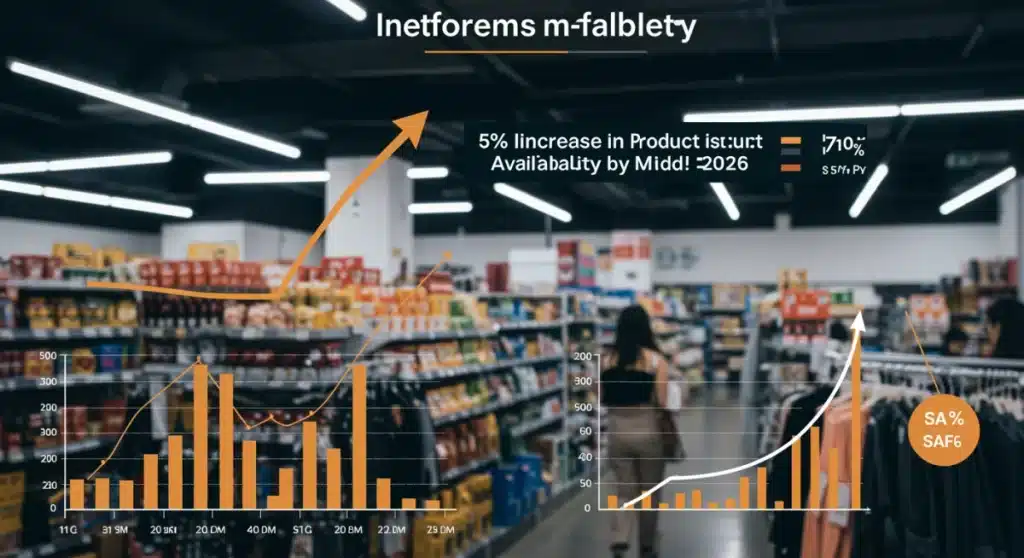
A Recent Economic Report Forecasts a 5% Increase in Product Discount Availability by Mid-2026, a significant development for consumers and businesses across the United States. This forecast, released by leading economic analysts, suggests a notable shift in market dynamics, potentially leading to more favorable purchasing conditions for consumers.
Anúncios
The report highlights an anticipated rise in promotional activities and price reductions as companies adapt to evolving economic pressures and consumer demand patterns. This news comes as a crucial update for anyone tracking retail trends and personal finance, offering a glimpse into future market behavior.
Understanding the implications of this forecast is essential for both shoppers looking to maximize their savings and businesses strategizing for the coming years. The projected increase in discounts could reshape consumer spending habits and competitive landscapes within various industries.
Understanding the Economic Forecast for Discounts
The recent economic report provides a detailed analysis of factors contributing to the expected rise in product discounts. It delves into supply chain adjustments, inventory levels, and consumer spending forecasts, painting a comprehensive picture of the market.
Analysts suggest that a combination of increased production capabilities and a potential moderation in consumer demand could drive retailers to offer more competitive pricing. This strategic move aims to stimulate sales and maintain market share in a dynamic economic environment.
Anúncios
The report emphasizes that this trend is not uniform across all sectors but is projected to be widespread enough to impact overall product discount availability. Retailers are already beginning to prepare for these anticipated shifts, adjusting their inventory and marketing strategies accordingly.
Key Drivers Behind the Projected 5% Increase
Several fundamental economic indicators and market forces are identified as primary drivers behind the projected 5% increase in product discount availability. These factors collectively create an environment conducive to more prevalent sales and promotions.
One significant factor is the anticipated stabilization and improvement of global supply chains. As disruptions lessen, the cost of goods for retailers may decrease, allowing for greater flexibility in pricing and the ability to pass savings onto consumers through discounts.
Another key driver is the evolving landscape of consumer spending. While inflation has been a concern, a potential easing could lead to consumers becoming more price-sensitive, compelling businesses to offer discounts to attract and retain customers effectively.
Supply Chain Normalization and Inventory Buildup
The normalization of global supply chains plays a pivotal role in this forecast. Over the past few years, disruptions led to product shortages and higher prices, but as these issues resolve, inventory levels are expected to rise.
With increased stock and potentially slower demand growth in certain sectors, retailers will face pressure to move products efficiently. This often translates into more aggressive discounting strategies to clear inventory and make way for new merchandise.
The ability to manage inventory effectively without incurring significant holding costs becomes crucial. Discounts serve as a powerful tool for businesses to balance supply with demand, ensuring a healthy flow of goods through their sales channels.
Consumer Behavior Shifts and Market Competition
Changes in consumer behavior are also a significant driver. As economic conditions fluctuate, consumers tend to become more discerning with their purchases, actively seeking out value and promotions.
This heightened price sensitivity forces retailers to engage in more intense competition. Offering discounts becomes a necessity to stand out in a crowded marketplace and capture the attention of budget-conscious shoppers.
The competitive landscape, therefore, directly influences the frequency and depth of discounts. Businesses that fail to adapt their pricing strategies risk losing market share to competitors who are more agile in responding to consumer demands for better deals.
Impact on Various Retail Sectors
The forecast 5% increase in product discount availability is expected to have varying impacts across different retail sectors. While some industries may see a more pronounced shift, others might experience more subtle changes.
Electronics, apparel, and home goods are traditionally sectors where discounts are frequently used to drive sales and clear seasonal inventory. These areas are likely to be among the first to reflect the increased discounting trend.
Conversely, essential goods and services might see less dramatic changes, although even these categories could experience targeted promotions. The overall effect will be a more discount-rich environment for consumers across a broad spectrum of products.
Electronics and Apparel: Leading the Discount Wave
The electronics sector, characterized by rapid technological advancements and frequent product refreshes, is poised to be a frontrunner in offering increased discounts. As newer models emerge, retailers often discount older inventory to make space.
Similarly, the apparel industry, driven by seasonal fashion cycles and trends, frequently relies on sales and promotions. A Recent Economic Report Forecasts a 5% Increase in Product Discount Availability by Mid-2026 suggests even more aggressive end-of-season or holiday sales.
Consumers looking for deals on gadgets, clothing, and accessories should pay close attention to these sectors. The projected increase means more opportunities to purchase high-value items at reduced prices, making strategic shopping more rewarding.
Home Goods and Other Discretionary Spending
The home goods market, including furniture, decor, and small appliances, is also expected to experience a notable uptick in discount availability. As consumers continue to invest in their living spaces, retailers will compete to capture this demand.
Other discretionary spending categories, such as health and beauty products, sporting goods, and entertainment items, are likely to follow suit. These sectors often respond quickly to shifts in consumer confidence and disposable income.
The overall trend indicates a broader market adjustment where consumers will find more value propositions across a wider range of non-essential items. This could encourage consumers to make purchases they might have otherwise postponed.

Consumer Strategies for Maximizing Savings
With a Recent Economic Report Forecasts a 5% Increase in Product Discount Availability by Mid-2026, consumers have a unique opportunity to refine their shopping strategies and maximize their savings. Being informed and proactive will be key to taking full advantage of these market shifts.
One effective strategy involves tracking prices and waiting for optimal discount periods. Many retailers follow predictable sales cycles, and with an anticipated increase in overall discounts, these cycles may become even more generous or frequent.
Additionally, consumers should consider utilizing price comparison tools, signing up for loyalty programs, and subscribing to newsletters from their favorite brands. These resources can provide early access to promotions and exclusive deals, enhancing overall savings.
Leveraging Price Tracking and Sales Cycles
Effective price tracking tools and apps can help consumers monitor product prices over time, alerting them when items drop to their lowest points. This proactive approach ensures purchases are made at the most opportune moments.
Understanding typical sales cycles for different product categories is also beneficial. For example, electronics often see discounts around major holidays, while apparel sales are common at the end of seasons. With the forecast, these sales could be more significant.
By combining price tracking with an awareness of sales cycles, consumers can strategically plan their purchases, avoiding impulse buys and securing the best possible deals as the discount availability increases.
Utilizing Loyalty Programs and Exclusive Offers
Loyalty programs offered by retailers can provide substantial benefits, including exclusive discounts, early access to sales, and reward points that can be redeemed for future purchases. Joining these programs aligns perfectly with a discount-rich market.
Subscribing to retailer newsletters and following their social media channels can also unlock exclusive offers. Many businesses use these platforms to announce flash sales or special promotions only available to their subscribers or followers.
These channels become even more important when a Recent Economic Report Forecasts a 5% Increase in Product Discount Availability by Mid-2026, as retailers will be actively seeking ways to engage consumers with their heightened promotional efforts.
Business Responses to Increased Discounting
Businesses are not passive observers in this economic shift; they are actively developing strategies to respond to the forecast 5% increase in product discount availability. Their responses will shape the competitive landscape and consumer experience.
Many retailers are likely to refine their promotional calendars, integrating more frequent and impactful sales events throughout the year. This proactive approach aims to capture consumer attention and maintain sales momentum.
Furthermore, businesses may explore innovative discounting models, such as personalized offers based on purchase history or dynamic pricing that adjusts in real-time. These strategies seek to optimize both sales volume and profit margins.

Adapting Promotional Calendars and Marketing
Retailers are already reviewing their promotional calendars to incorporate the anticipated increase in discount availability. This means planning for more robust sales events, not just during traditional holiday periods but throughout the year.
Marketing departments will play a crucial role in communicating these discounts effectively to consumers. Campaigns will likely focus on highlighting the value proposition and the immediate savings available, leveraging various digital and traditional channels.
The goal is to create a compelling narrative around the increased discounts, ensuring that consumers are aware of the opportunities and are encouraged to make purchases within the promotional windows. This requires a well-coordinated marketing effort.
Innovation in Pricing and Customer Engagement
Beyond traditional sales, businesses are exploring innovative pricing strategies. Dynamic pricing, where prices fluctuate based on demand, inventory, and even competitor actions, could become more prevalent.
Personalized discounts, tailored to individual customer preferences and past purchase behavior, are also gaining traction. This approach enhances customer loyalty and makes discounts feel more relevant and valuable to the individual shopper.
Engaging customers through loyalty programs, exclusive early access to sales, and interactive promotional content will be vital. Businesses that innovate in their pricing and engagement strategies will be better positioned to thrive in a market with increased discount availability.
Potential Economic Implications and Market Shifts
The forecast 5% increase in product discount availability carries significant economic implications that extend beyond individual transactions. It suggests broader market shifts and potential impacts on inflation, consumer spending, and retail profitability.
While increased discounts are beneficial for consumers, they could also signal a period of intense competition among retailers, potentially compressing profit margins for some businesses. This could lead to a more consolidated retail landscape.
From a macroeconomic perspective, sustained discounting could influence inflation rates and overall economic growth. A balance between stimulating demand and maintaining healthy business operations will be crucial for the economy.
Inflationary Pressures and Consumer Spending
The increase in discounts could act as a counter-force to inflationary pressures, making goods more affordable for consumers. This could free up disposable income, potentially stimulating spending in other areas of the economy.
However, if discounts are a result of significant oversupply or weakened demand, it could signal underlying economic challenges. Policymakers and economists will be closely monitoring these trends to assess the overall health of the economy.
The interplay between discount availability, inflation, and consumer confidence will be a key area of focus. A Recent Economic Report Forecasts a 5% Increase in Product Discount Availability by Mid-2026 provides an important data point for these analyses.
Retail Profitability and Industry Consolidation
For retailers, increased discounting directly impacts profitability. While discounts can drive sales volume, they also reduce the revenue generated per item, putting pressure on profit margins, especially for businesses with high operating costs.
This environment could favor larger retailers with greater purchasing power and more efficient supply chains, potentially leading to industry consolidation. Smaller businesses might find it challenging to compete on price alone.
Therefore, businesses will need to carefully balance their discounting strategies with cost management and value-added services to maintain profitability. The increased discount availability will test the resilience and adaptability of the retail sector.
| Key Point | Brief Description |
|---|---|
| Forecast Overview | A 5% increase in product discount availability projected by mid-2026. |
| Driving Factors | Supply chain normalization, inventory buildup, and shifts in consumer behavior. |
| Consumer Impact | Greater opportunities for savings, requiring strategic shopping approaches. |
| Business Response | Adaptation of promotional strategies, innovative pricing, and customer engagement. |
Frequently Asked Questions About Product Discounts
For average consumers, this forecast suggests a more favorable shopping environment. It means there will likely be more opportunities to find products at reduced prices across various categories, allowing for greater savings and potentially increasing purchasing power on discretionary items.
Historically, sectors like electronics, apparel, and home goods tend to be more responsive to discounting trends due to rapid product cycles and seasonal demand. These categories are expected to lead the increase, offering more frequent and substantial sales.
Businesses should proactively review their inventory management, adjust promotional calendars, and explore dynamic pricing strategies. Focusing on customer loyalty programs and personalized offers can also help maintain profitability amidst increased competition and discounting pressures.
Generally, an increase in discount availability does not directly correlate with a decrease in product quality. Discounts often result from inventory management, market competition, or promotional strategies rather than flaws in the product itself. Consumers should still research products.
Normalized and improved supply chains are crucial. As disruptions ease, the cost of goods for retailers can decrease, and inventory levels stabilize. This allows businesses more leeway to offer discounts without significantly impacting their profit margins, benefiting consumers.
Looking Ahead: Navigating the Discount Landscape
The Recent Economic Report Forecasts a 5% Increase in Product Discount Availability by Mid-2026 signals a dynamic period for both consumers and the retail sector. This shift presents opportunities for significant savings and demands strategic adaptation from businesses. Monitoring ongoing economic indicators and retail announcements will be essential for navigating this evolving landscape successfully.
Consumers are encouraged to stay informed and leverage available tools to maximize their purchasing power, while businesses must innovate to remain competitive. The coming months will reveal how these projections translate into real-world market behavior and redefine the value proposition for shoppers.
Ultimately, the report underscores the continuous evolution of the market. Staying agile and informed will be key for all stakeholders to effectively respond to and capitalize on the foreseen increase in product discount availability.