Data Deep Dive: 10% Increase in Demand for Personalized Products Across US Markets Since Last Year
Anúncios
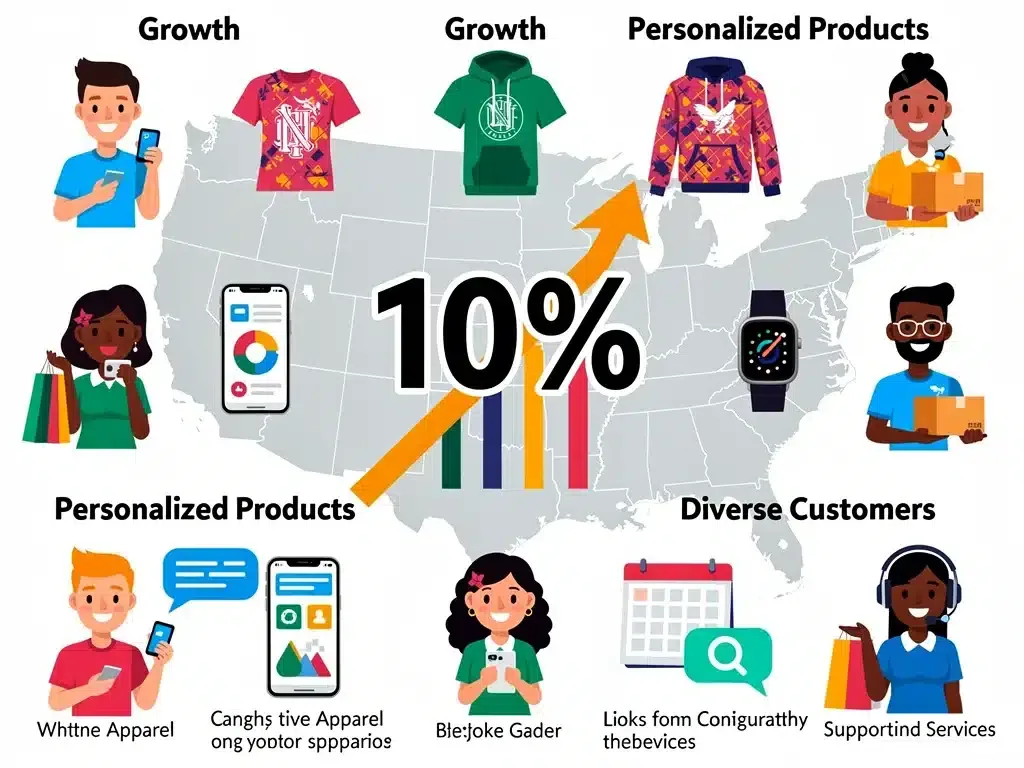
Today’s consumers are officially ditching mass production in favor of tailor-made experiences, driving a huge surge in demand for Personalized Products across the US. From custom engraving to bespoke formulations, shoppers are paying top dollar for goods crafted exclusively for them.
This 10% year-over-year rise highlights a fundamental shift in retail strategy, where individualized offerings build stronger brand loyalty and higher margins. Modern buyers no longer just want a product—they want a unique reflection of their identity.
For brands aiming to capture market share, leveraging mass-customization tech is becoming a necessity rather than an added bonus. Here is what the latest consumer data reveals about this rapidly growing retail trend.
Understanding the Personalization Phenomenon
The rise in demand for personalized products is not merely a passing fad but a deep-seated change in consumer psychology. Shoppers are increasingly seeking unique items that reflect their identity, values, and specific requirements.
This shift is largely fueled by technological advancements that make mass customization more accessible and affordable for both businesses and consumers. From custom-engraved items to bespoke clothing, the options for personalization have expanded dramatically.
Anúncios
The Increase in Demand for Personalized Products confirms that this isn’t isolated to niche markets but is a broad-based movement impacting numerous sectors across the US.
Key Drivers of Personalized Product Demand
Several factors contribute to the escalating demand for personalized products. Consumers are empowered by digital platforms that offer unprecedented levels of choice and customization.
Social media also plays a significant role, as individuals seek to express their unique identities and stand out from the crowd. The desire for exclusivity and a sense of ownership over products tailored specifically for them is a powerful motivator.
Moreover, the convenience of online customization tools and faster delivery options has made personalized shopping a seamless and attractive experience, further propelling this trend.
- Technological Advancements: Improved manufacturing processes and digital design tools enable efficient mass customization.
- Consumer Empowerment: Shoppers desire products that truly reflect their individuality and personal style.
- Social Media Influence: The pursuit of unique self-expression drives demand for distinctive items.
- Convenience and Accessibility: Easy-to-use online platforms simplify the customization process for everyone.
Sector-Specific Growth and Impact
The Personalized Products indicates that certain sectors are experiencing this growth more acutely than others. Retail, particularly fashion and accessories, leads the charge, alongside home goods and digital services.
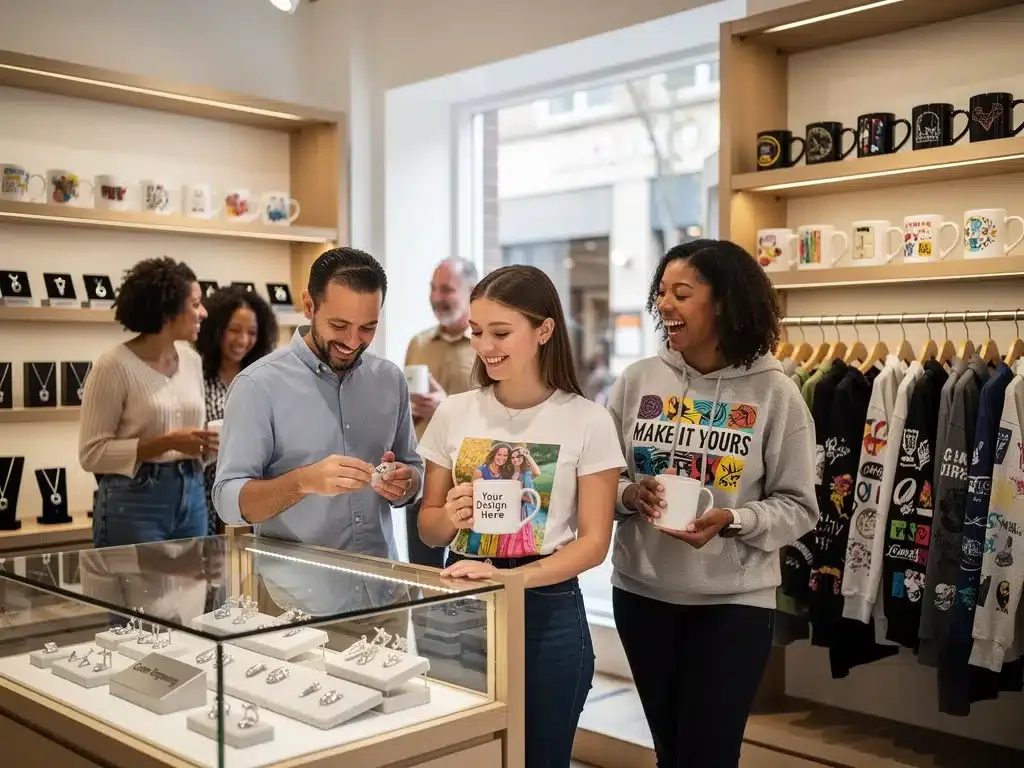
In the fashion industry, custom apparel and accessories allow consumers to dictate design, material, and fit, moving away from standard sizing. This not only enhances satisfaction but also reduces waste associated with ill-fitting or unwanted items.
The technology sector also sees considerable innovation, with personalized software, device accessories, and even custom-built computers gaining traction. This cross-sector appeal highlights the broad applicability of personalization strategies.
Anúncios
Retail and E-commerce Transformation
Retailers are rapidly adapting to this shift, integrating personalization options into their online and in-store experiences. E-commerce platforms, in particular, are well-positioned to offer extensive customization choices, from product configuration to packaging.
The ability to visualize personalized items before purchase, often through augmented reality or 3D rendering, has become a key feature. This enhances consumer confidence and drives conversion rates for businesses embracing personalization.
The competitive landscape demands that businesses not only offer personalized products but also deliver a personalized shopping journey, from recommendations to post-purchase support, echoing the findings of the Increase in Demand for Personalized Products.
Consumer Behavior and Expectations
The modern consumer is more discerning and demanding than ever before, with personalization now often viewed as a standard expectation rather than a luxury. This evolving mindset is a critical component of the Increase in Demand for Personalized Products.
Consumers are willing to pay a premium for products that meet their exact specifications and resonate with their personal brand. This willingness to invest in bespoke items signifies a deeper engagement with products and brands.
Furthermore, the expectation of a personalized experience extends beyond the product itself to customer service and marketing communications. Brands that fail to acknowledge this holistic demand risk falling behind their more adaptable competitors.
The Value Proposition of Personalization
For consumers, the value of personalization lies in the unique utility and emotional connection it provides. A personalized item often holds greater sentimental value and offers a more precise solution to individual needs.
This intrinsic value translates into stronger brand loyalty and repeat purchases, as consumers seek out companies that understand and cater to their specific desires. The investment in a personalized product is often seen as an investment in oneself.
Businesses that effectively communicate the benefits of their personalized offerings are better positioned to capture this growing market segment, as highlighted by the Increase in Demand for Personalized Products.
- Enhanced Utility: Products are tailored to exact needs, increasing their practical value.
- Emotional Connection: Personalized items foster a stronger bond between consumer and product.
- Brand Loyalty: Companies offering customization often see higher customer retention.
- Premium Pricing: Consumers are often prepared to pay more for unique, tailored goods.
The Increase in Demand for Personalized Products reveals that companies leveraging personalization effectively are seeing significant gains in customer satisfaction and market share. This strategic advantage is becoming increasingly vital.
Personalization also extends to the service industry, where tailored experiences, from travel itineraries to educational programs, are gaining immense popularity. Consumers expect services to be as adaptable and responsive as the products they purchase.
The implications are clear: businesses that ignore the call for personalized offerings risk obsolescence in a market increasingly driven by individual choice and unique preferences.
Technological Facilitators and Innovations
The dramatic increase in personalized product demand would not be possible without significant advancements in technology. These innovations provide the backbone for efficient and scalable customization.
From advanced manufacturing techniques like 3D printing to sophisticated AI-driven recommendation engines, technology is transforming how products are designed, produced, and delivered. This technological evolution is a cornerstone of the Increase in Demand for Personalized Products.
These tools allow businesses to offer a vast array of personalization options without incurring prohibitive costs or sacrificing production efficiency, making customization accessible to a broader market.
AI and Data Analytics in Personalization
Artificial intelligence (AI) and data analytics are central to understanding and meeting personalized product demand. AI algorithms can analyze vast amounts of consumer data to predict preferences, recommend tailored products, and even assist in design.
This data-driven approach enables businesses to create highly relevant and engaging personalized experiences, often anticipating consumer needs before they are explicitly stated. The insights derived from data are invaluable for refining personalization strategies.
The role of these technologies will only grow, as continuous learning systems improve the accuracy and effectiveness of personalization efforts, further fueling the trend identified by the Increase in Demand for Personalized Products.
- Predictive Analytics: AI anticipates consumer needs and preferences, streamlining product development.
- Recommendation Engines: Algorithms suggest highly relevant personalized items, improving user experience.
- Automated Design: AI tools assist in generating custom designs based on user input.
- Efficient Production: Technology enables cost-effective manufacturing of unique, personalized goods.
Challenges and Opportunities for Businesses
While the Increase in Demand for Personalized Products presents a clear opportunity, businesses also face significant challenges. Managing complex customization processes, maintaining quality, and ensuring efficient supply chains are paramount.
Implementing personalization requires substantial investment in technology, infrastructure, and skilled personnel. Businesses must carefully weigh these costs against the potential returns and competitive advantages.
However, the rewards for successful personalization strategies are considerable, including enhanced customer loyalty, premium pricing potential, and a stronger market position in an increasingly competitive environment.
Navigating the Personalization Landscape
Businesses looking to capitalize on this trend must adopt a customer-centric approach, prioritizing understanding individual needs and preferences. This involves collecting and analyzing data responsibly and ethically.
Developing flexible production capabilities that can handle diverse customization requests without compromising efficiency is also crucial. This may involve integrating new manufacturing technologies or partnering with specialized suppliers.
Ultimately, success in the personalized product market hinges on a brand’s ability to consistently deliver unique, high-quality items that resonate deeply with individual consumers, as evidenced by the Increase in Demand for Personalized Products.
The Future of Personalized Products in the US
The current Increase in Demand for Personalized Products is likely just the beginning of a larger, sustained shift. The desire for individuality and unique expression is a powerful and enduring human trait.
Future trends will likely see even greater integration of personalization across all aspects of consumption, from everyday necessities to luxury goods. The line between mass production and bespoke creation will continue to blur.
This ongoing evolution promises exciting possibilities for both consumers and businesses, fostering a market driven by innovation, choice, and a deeper connection between products and their users.
Emerging Trends and Innovations
Looking ahead, we can anticipate further advancements in areas such as hyper-personalization, where products adapt dynamically to user behavior and context. Wearable technology, for instance, could offer real-time customization based on biometric data or environmental factors.
The ethical implications of data collection and privacy will also become increasingly important as personalization becomes more sophisticated. Businesses must build trust by being transparent about their data practices and offering consumers greater control over their information.
The trajectory set by the Increase in Demand for Personalized Products suggests a future where personalization is not just an option, but a fundamental aspect of the consumer experience.

Economic Implications and Market Dynamics
The Increase in Demand for Personalized Products carries significant economic implications, reshaping market dynamics and influencing investment decisions. Companies that quickly adapt to this trend are likely to capture a larger share of consumer spending.
This shift encourages innovation, as businesses compete to offer more novel and effective personalization options. It also fosters a more diverse marketplace, with room for both large corporations and agile niche brands.
The economic impact extends to job creation in design, technology, and specialized manufacturing, contributing to a more dynamic and responsive economy driven by consumer preferences.
Investment and Growth Opportunities
Investors are keenly observing the personalized products market, recognizing its high growth potential. Startups and established companies focusing on customization technologies and personalized services are attracting significant capital.
The ability to command premium prices for unique products translates into higher profit margins for businesses that excel in personalization. This financial incentive drives further investment into research and development in this area.
The long-term outlook, informed by the Increase in Demand for Personalized Products, points to continued expansion and maturation of this market segment, making it a critical area for economic growth and strategic planning.
The Increase in Demand for Personalized Products also suggests a shift in manufacturing paradigms. Traditional mass production models are being supplemented, and in some cases, challenged, by more agile, on-demand production systems.
This flexibility allows for greater responsiveness to market changes and reduced inventory risks, benefiting businesses that can successfully implement these models. The supply chain itself is evolving to support these customized workflows.
Ultimately, the economic landscape is being reshaped by consumers’ desire for unique, tailor-made solutions, pushing industries to innovate and adapt at an unprecedented pace.
| Key Finding | Brief Description |
|---|---|
| 10% Demand Surge | Significant increase in personalized product demand across US markets in the last year. |
| Consumer-Driven | Fueled by desire for uniqueness, self-expression, and tailored solutions. |
| Tech-Enabled Growth | Advanced manufacturing, AI, and data analytics facilitate mass customization. |
| Market Transformation | Reshaping retail, e-commerce, and service industries with new business models. |
Frequently Asked Questions About Personalized Product Demand
What exactly does the 10% increase in demand for personalized products signify?▼The 10% increase signifies a substantial growth in consumer preference for products tailored to individual specifications. This highlights a shift from generic mass-market goods to items that offer uniqueness and personal relevance, impacting various sectors across the US economy.
Which sectors are most affected by this surge in personalized product demand?▼The retail sector, particularly fashion, accessories, and home goods, is significantly impacted. E-commerce platforms are also experiencing considerable growth in personalized offerings. The technology sector, with custom gadgets and software, also shows a strong response to this trend.
How are businesses adapting to this rising demand for personalized products?▼Businesses are integrating advanced technologies like AI and 3D printing, enhancing online customization tools, and focusing on data analytics to understand consumer preferences. They are also revamping supply chains to support more flexible and on-demand production models effectively.
What role does technology play in facilitating the personalization trend?▼Technology is crucial, providing tools for mass customization, efficient production, and data-driven insights. AI algorithms predict consumer needs, while digital platforms enable easy product configuration and visualization, making personalized shopping accessible and scalable for consumers and businesses alike.
What are the long-term implications of this 10% increase for the US market?▼Long-term implications include continued market transformation, increased innovation, and a greater focus on customer-centric strategies. It suggests a future where personalization becomes a standard expectation, influencing investment, job creation, and the overall economic landscape in the United States.
Perspectives
The Increase in Demand for Personalized Products marks a significant turning point in consumer behavior and market dynamics. This sustained growth underscores a fundamental shift where individuality and tailored experiences are paramount.
Businesses must continue to innovate, leveraging technology and deep consumer insights to meet these evolving expectations. The ability to offer unique, high-quality personalized products will be a key differentiator in the competitive landscape.
Monitoring future trends in AI, manufacturing, and consumer privacy will be essential for navigating this dynamic market successfully. The era of personalized consumption is clearly here to stay, reshaping how products are conceived, created, and consumed.