Are 4.8% High-Yield Cash Accounts Still Viable? Strategic Alternatives Before Federal Reserve Rate Shifts
Anúncios
Earning a 4.8% APY on liquid capital has provided a dependable safe haven, but upcoming monetary policy pivots could quickly shrink those yields. Re-evaluating High-Yield Cash Accounts before central bank rate cuts takes effect is essential for locking in maximum returns on your liquid reserves.
Because cash-equivalent sweep accounts and variable savings vehicles track money market rates closely, yield compression can happen overnight when benchmarks drop. Wealth managers recommend diversifying into short-term Treasury bills, fixed certificates of deposit, and defensive bond funds to lock in yields before interest rates fall.
Protecting cash flow and preserving capital requires acting before variable rates decrease further. Here is how to navigate shifting monetary policy, safeguard interest earnings, and deploy cash reserves effectively across high-performing yield alternatives.
The Current Landscape of High-Yield Cash Accounts
High-yield cash accounts, including high-yield savings accounts (HYSAs) and money market accounts (MMAs), have offered attractive returns for savers over the past few years. These accounts typically provide significantly higher interest rates than traditional savings accounts, making them popular vehicles for emergency funds and short-term savings.
The rates offered by these accounts are often tied to the Federal Funds Rate, which the Federal Reserve sets. Consequently, as the Fed raised rates to combat inflation, the yields on these cash accounts followed suit, reaching levels around 4.8% or even higher at their peak.
Anúncios
However, the economic environment is dynamic, and the Federal Reserve's future policy decisions are a key factor influencing the sustained viability of these rates. Market analysts are closely monitoring inflation data and employment figures, which heavily inform the Fed's rate decisions.
Understanding Federal Reserve Rate Shifts
The Federal Reserve employs interest rate adjustments as a primary tool to manage inflation and economic growth. When inflation is high, the Fed typically raises rates to cool down the economy by making borrowing more expensive, thereby reducing spending and investment.
Conversely, when economic growth slows or deflationary pressures emerge, the Fed may lower rates to stimulate borrowing and economic activity. These shifts have profound implications for all interest-bearing financial products, including high-yield cash accounts.
Recent statements from Fed officials suggest a potential plateau in rate hikes, with an eye towards possible cuts in the future, depending on economic data. This anticipation of future rate movements is what prompts investors to question the long-term viability of current high-yield offerings.
Historical Context of Fed Rate Cycles
Historically, periods of sustained high interest rates are often followed by periods of stabilization or reduction. Understanding these cycles provides context for current market expectations regarding the Federal Reserve's future actions.
The current cycle, marked by aggressive rate hikes, has been unique in its speed and magnitude. This unprecedented pace underscores the importance of a flexible and responsive investment strategy for those holding high-yield cash accounts.
2008 Financial Crisis: Near-zero rates for an extended period.
2015-2018 Tightening Cycle: Gradual rate increases.
2020 COVID-19 Response: Rapid rate cuts to stimulate the economy.
2022-2023 Inflation Combat: Aggressive rate hikes.
Are 4.8% High-Yield Cash Accounts Still Viable?
The viability of 4.8% high-yield cash accounts largely depends on the Federal Reserve's upcoming decisions. If the Fed maintains current rates for an extended period, or even implements further modest hikes, these accounts could continue to offer competitive returns.
Anúncios
However, if the Federal Reserve begins to cut rates, as many economists anticipate in late 2024 or 2025, the yields on these accounts would likely decrease. This potential reduction in yield is the primary concern for investors currently holding significant cash in these accounts.
Therefore, while 4.8% accounts are currently viable and attractive, their future viability is contingent on broader monetary policy. Investors need to consider their time horizon and risk tolerance when assessing whether to maintain these holdings or explore alternatives.
Factors Influencing Viability
Several factors beyond direct Fed action influence the viability of high-yield cash accounts. These include the competitive landscape among financial institutions, which can drive rates up or down, and the overall demand for deposits.
Inflationary pressures also play a role; even a 4.8% yield might not represent a substantial real return if inflation remains elevated. This highlights the importance of considering real returns after accounting for inflation and taxes, not just nominal rates.
Strategic Alternatives Before Federal Reserve Rate Shifts
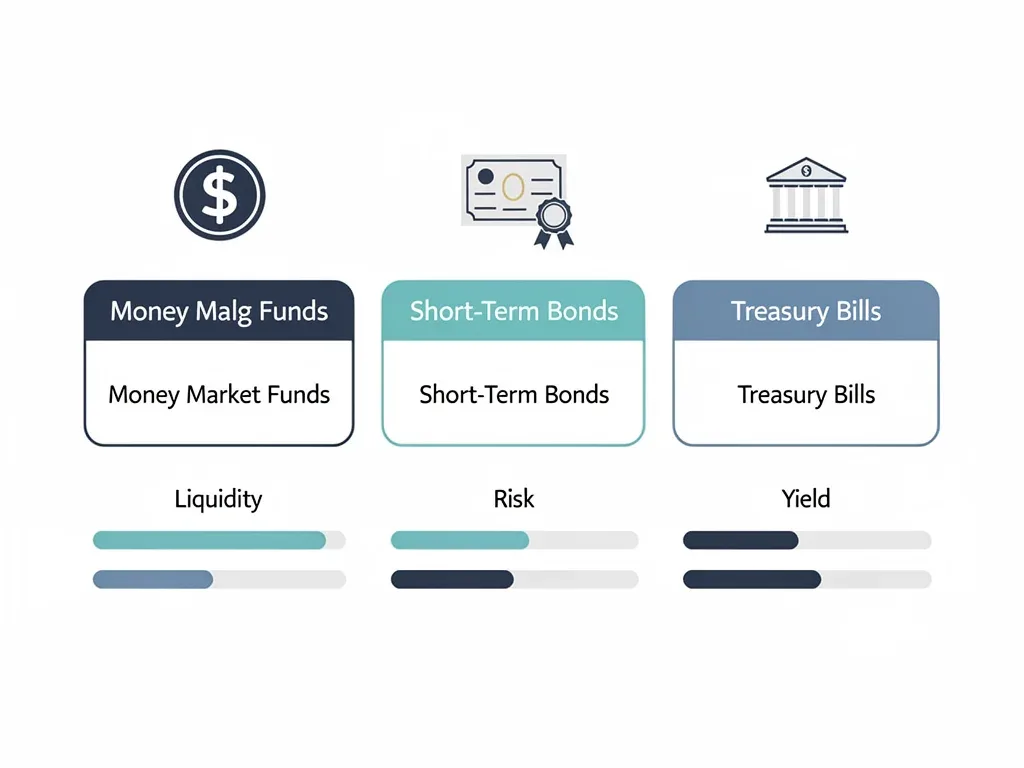
Given the potential for Federal Reserve rate shifts, investors should consider strategic alternatives to optimize their cash holdings. These alternatives aim to provide competitive returns while offering different levels of liquidity and risk.
Diversifying cash and short-term holdings across various instruments can help mitigate the impact of declining HYSA rates. This approach ensures that a portion of capital remains liquid, while other portions seek potentially higher, albeit often less liquid, returns.
The key is to match the alternative to your specific financial goals, time horizon, and risk appetite. There is no one-size-fits-all solution when it comes to navigating the complexities of interest rate changes.
Money Market Funds (MMFs)
Money market funds are a popular alternative to high-yield cash accounts, particularly institutional money market funds. These funds invest in highly liquid, short-term debt instruments, such as Treasury bills, commercial paper, and certificates of deposit.
They often offer yields comparable to or slightly higher than HYSAs, with similar liquidity. However, MMFs are technically investments, not deposits, and thus are not FDIC-insured, although they are generally considered very low risk.
Higher potential yields: Often slightly outperform HYSAs.
Daily liquidity: Access to funds typically within one business day.
Diversification: Invest in a basket of short-term securities.
Minimal risk: Though not FDIC-insured, they are highly regulated.
Short-Term Treasury Bills (T-Bills)
Short-term Treasury bills, issued by the U.S. Department of the Treasury, are another excellent option for cash management. They are considered one of the safest investments globally, backed by the full faith and credit of the U.S. government.
T-bills mature in a year or less and can offer competitive yields, especially when interest rates are high. They are also exempt from state and local income taxes, which can be a significant advantage for investors in high-tax states.
Purchasing T-bills directly through TreasuryDirect or via a brokerage account can provide a stable return. Their fixed maturity also offers predictability, which is valuable in an uncertain rate environment, making them a strong contender against 4.8% high-yield cash accounts still viable.
Certificates of Deposit (CDs)
Certificates of Deposit (CDs) offer fixed interest rates for a specified term, ranging from a few months to several years. They are FDIC-insured, providing a high degree of safety for your principal.
CDs can be particularly attractive in an environment where rates are expected to fall, as they allow investors to lock in a higher rate for a longer period. Laddering CDs, where you invest in CDs with staggered maturity dates, can provide both liquidity and access to potentially higher rates as older CDs mature.
While CDs typically require you to tie up your money for the duration of the term (with penalties for early withdrawal), they can be a strategic choice for funds you don't need immediate access to, especially if you are concerned about the future of 4.8% high-yield cash accounts still viable.
Evaluating Risk and Liquidity in Alternatives
When considering alternatives to high-yield cash accounts, it is essential to evaluate both risk and liquidity. While HYSAs offer high liquidity and FDIC insurance, some alternatives may involve different risk profiles and access constraints.
For instance, money market funds, while highly liquid, carry a marginal risk of principal loss, although it is extremely rare. Short-term T-bills are virtually risk-free but require a specific maturity period, impacting immediate access to funds.
CDs offer safety and fixed returns but come with early withdrawal penalties. A balanced approach involves understanding these trade-offs and aligning them with your personal financial needs and tolerance for risk. The discussion around 4.8% High-Yield Cash Accounts Still Viable often centers on this balance.
Understanding Your Financial Needs
Before committing to any alternative, assess your immediate and future cash needs. Emergency funds should always be kept in highly liquid, low-risk accounts. Funds earmarked for short-term goals might be suitable for slightly less liquid but higher-yielding options.
For long-term goals, a broader range of investment vehicles, including stocks and bonds, might be more appropriate. The decision to move away from high-yield cash accounts should be part of a holistic financial plan.
Consulting with a financial advisor can provide personalized guidance based on your unique circumstances. This ensures that any strategic shifts are well-informed and aligned with your overall financial objectives.
Impact of Inflation on Real Returns
While nominal interest rates on high-yield cash accounts may seem attractive, it is crucial to consider the impact of inflation on real returns. Inflation erodes the purchasing power of money over time, meaning that a 4.8% yield might not be as beneficial if inflation is also high.
For example, if an account yields 4.8% but inflation is running at 3%, the real return is only 1.8%. This distinction is vital for investors aiming to grow their wealth in real terms, not just in nominal dollar amounts.
When evaluating alternatives or assessing whether 4.8% high-yield cash accounts are still viable, always factor in the current and projected inflation rates. This provides a more accurate picture of the true earning power of your savings.
Protecting Purchasing Power
To protect purchasing power, some investors might consider inflation-indexed securities like Treasury Inflation-Protected Securities (TIPS). TIPS adjust their principal value based on changes in the Consumer Price Index (CPI), offering protection against inflation.
While TIPS may offer lower nominal yields compared to HYSAs or T-bills, their inflation protection can be invaluable in periods of high or uncertain inflation. This makes them a relevant consideration in the context of High-Yield Cash Accounts.

Tax Implications of Different Cash Strategies
The tax treatment of interest income from various cash management strategies can significantly impact net returns. Interest earned from high-yield savings accounts and money market funds is generally subject to federal, state, and local income taxes.
Conversely, interest from U.S. Treasury bills and bonds is exempt from state and local income taxes, though still subject to federal taxes. This tax advantage can make T-bills particularly attractive for investors in states with high income tax rates.
Understanding these tax implications is crucial for maximizing your after-tax returns. Always consider how different investment choices will affect your overall tax burden, especially when debating High-Yield Cash Accounts.
Optimizing After-Tax Returns
For high-income earners, municipal bonds (munis) can be another tax-efficient alternative. Interest earned on municipal bonds is often exempt from federal income tax and, in some cases, state and local taxes if you reside in the issuing state.
While municipal bonds typically offer lower nominal yields than taxable bonds, their tax-exempt status can result in a higher after-tax equivalent yield. This makes them a valuable tool for optimizing after-tax returns within a diversified portfolio, enhancing the discussion around High-Yield Cash Accounts.
Key Consideration | Brief Description |
|---|---|
Fed Rate Outlook | Future Federal Reserve policy dictates HYSA viability. |
Strategic Alternatives | Explore MMFs, T-Bills, CDs for diversified cash management. |
Risk & Liquidity | Balance safety and access with potential returns. |
Tax Implications | Consider after-tax returns, especially for state/local exemptions. |
Frequently Asked Questions About High-Yield Cash Accounts
Will 4.8% high-yield cash accounts maintain their rates?▼
The sustainability of 4.8% rates is highly dependent on future Federal Reserve interest rate decisions. If the Fed cuts rates, yields will likely decline. Investors should monitor economic indicators and Fed announcements closely to anticipate changes.
What are the primary risks of high-yield cash accounts?▼
The main risk is interest rate risk; if the Federal Reserve lowers rates, the yield on these accounts will decrease. While FDIC-insured up to limits, their purchasing power can also be eroded by inflation if real returns are negative.
How do Money Market Funds compare to HYSAs?▼
Money Market Funds (MMFs) often offer comparable or slightly higher yields than HYSAs, with similar liquidity. However, MMFs are investments and not FDIC-insured, unlike HYSAs, which are bank deposits. They typically hold diverse short-term debt.
Are Treasury Bills a good alternative for short-term cash?▼
Yes, short-term Treasury Bills (T-Bills) are an excellent alternative. They are backed by the U.S. government, making them extremely safe, and their interest is exempt from state and local taxes, offering a tax advantage for many investors.
Should I consider Certificates of Deposit (CDs) now?▼
CDs can be a strategic choice, especially if you anticipate falling interest rates. Locking in a fixed rate for a set term can protect your returns. Laddering CDs can also provide liquidity while still benefiting from potentially higher rates.
What this means
The evolving economic landscape, particularly the anticipated Federal Reserve rate shifts, necessitates a proactive approach to cash management. While 4.8% high-yield cash accounts have served well, their future viability is uncertain.
Investors must critically assess their current holdings and explore strategic alternatives like Money Market Funds, T-Bills, and CDs to optimize returns, manage risk, and account for inflation and tax implications. This period demands informed decisions to safeguard and grow capital effectively.