Gift Tax Exclusion 2026: Asset Shielding Rules Explained
Anúncios

Are you taking full advantage of the internal revenue provisions designed to safeguard your family's generational wealth? Strategic utilization of the Gift Tax Exclusion 2026 allows individuals to transfer up to $19,000 per recipient without triggering IRS reporting requirements or tapping into lifetime exemptions.
Navigating these financial guidelines enables high-net-worth households to systematically shield assets and reduce total estate exposure. By combining allocation limits with spouse-splitting advantages or direct tuition transfers, savvy taxpayers can move substantial sums tax-free.
Understanding compliance standards and asset protection mechanisms is essential to prevent costly administrative penalties. Here is how to structure your annual wealth transfers to maximize tax savings while keeping your assets secure.
Understanding the $19,000 Annual Gift Tax Exclusion for 2026
The Internal Revenue Service (IRS) has confirmed the annual gift tax exclusion amount for 2026, which will be $19,000 per recipient. This increase from previous years offers taxpayers a significant opportunity to transfer wealth without incurring federal gift tax or utilizing their lifetime exemption.
This exclusion is a cornerstone of estate planning, allowing individuals to reduce the size of their taxable estate over time. Strategic use of this provision can significantly benefit families looking to transfer assets to younger generations efficiently.
Anúncios
However, navigating the nuances of this exclusion, particularly concerning asset shielding rules, requires careful attention to detail. Missteps can lead to unexpected tax liabilities and undermine the intended benefits.
Key Asset Shielding Rules for the 2026 Exclusion
Effective asset shielding is crucial when leveraging the gift tax exclusion 2026. These rules ensure that gifted assets are properly removed from the donor's estate and protected from future claims or taxes.
One primary rule involves the concept of a completed gift, meaning the donor must relinquish all control over the gifted asset. Any retained interest or control can invalidate the gift for tax purposes, leading to adverse outcomes.
Another vital aspect is ensuring proper documentation and valuation of gifted assets. Accurate records are indispensable for demonstrating compliance with IRS regulations and substantiating the use of the annual gift tax exclusion.
Irrevocable Trusts as a Shielding Mechanism
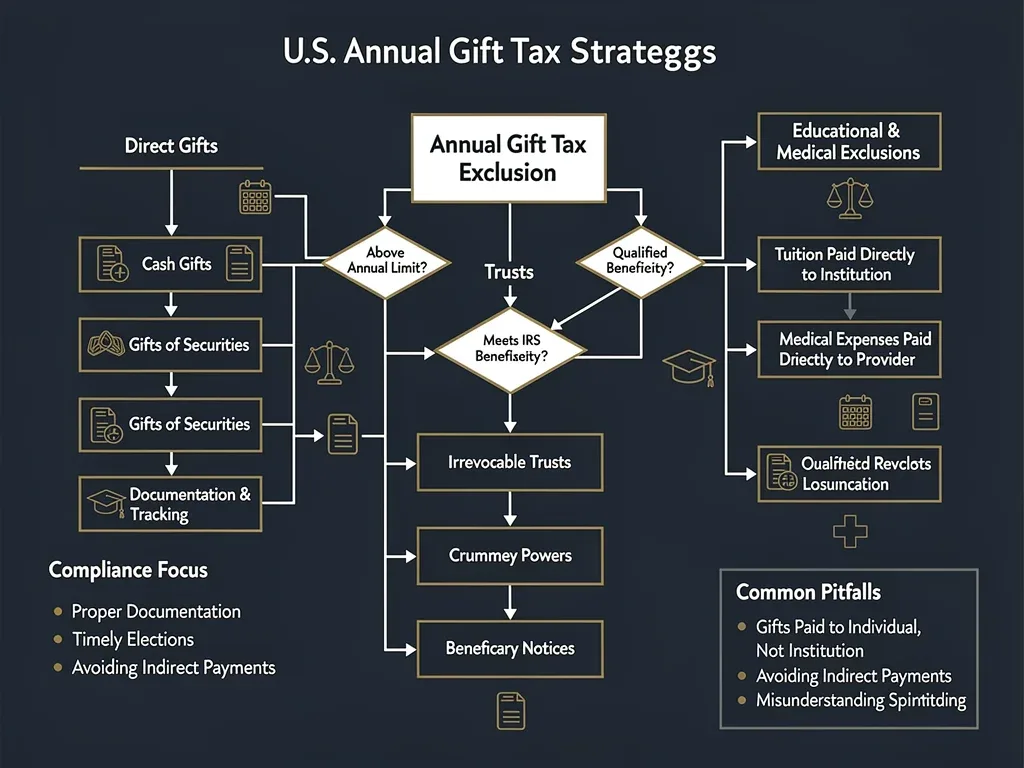
Irrevocable trusts are powerful tools for asset shielding when utilizing the gift tax exclusion 2026. Once assets are transferred into an irrevocable trust, they are generally removed from the grantor's taxable estate.
This provides a layer of protection against creditors and future estate taxes. Establishing such a trust requires careful legal drafting to ensure it meets all IRS requirements and serves the donor's specific objectives.
The selection of trustees and beneficiaries, along with the specific provisions governing distributions, are critical elements. These decisions directly impact the trust's effectiveness in shielding assets and facilitating tax-efficient transfers.
Anúncios
Grantor relinquishes control over assets.
Assets are protected from creditors and estate taxes.
Professional legal and financial advice is essential.
Direct Gifting Strategies and Their Limitations
Direct cash gifts or transfers of readily marketable securities are common ways to utilize the gift tax exclusion 2026. These methods are straightforward and can be easily documented.
However, direct gifts may not offer the same level of asset protection as trusts. Once gifted, the assets become the property of the recipient, subject to their financial decisions and potential liabilities.
It is important for donors to consider the financial maturity and circumstances of the recipients. While simple, direct gifts lack the structural safeguards that more complex planning vehicles provide.
Understanding the Present Interest Requirement
For a gift to qualify for the annual exclusion, it must be a gift of a "present interest." This means the recipient must have an immediate right to use, possess, or enjoy the gifted property.
Gifts that convey a future interest, such as contributions to certain types of trusts where beneficiaries do not have immediate access, generally do not qualify for the annual exclusion. This distinction is critical for compliance.
Crummey powers are often used in trusts to convert future interests into present interests, allowing contributions to the trust to qualify for the annual exclusion. These powers grant beneficiaries a temporary right to withdraw gifted funds.
Recipient must have immediate access to gifted assets.
Future interest gifts typically do not qualify.
Crummey powers can help trusts meet present interest rules.
Spousal Gifting and Gift Splitting Opportunities
Married couples have expanded opportunities when utilizing the gift tax exclusion 2026. Each spouse can make a separate $19,000 gift to the same individual without incurring gift tax.
This effectively doubles the annual exclusion amount to $38,000 per recipient per year. This strategy, known as gift splitting, can significantly accelerate wealth transfer.
To use gift splitting, both spouses must consent to split all gifts made during the calendar year. This election is typically made on Form 709, the United States Gift (and Generation-Skipping Transfer) Tax Return.

Maximizing Transfers with Gift Splitting
Gift splitting allows couples to transfer substantial assets to multiple beneficiaries over time. For example, a couple could gift $38,000 to each of their children and grandchildren annually, greatly reducing their taxable estate.
This strategy is particularly effective for large families or those with significant wealth. It provides a powerful mechanism for intergenerational wealth transfer that stays within the bounds of tax-free gifting.
However, it is vital that both spouses are aware of and agree to this strategy, as it impacts their individual gift tax reporting. Proper coordination and documentation are key to successful gift splitting.
Exclusions for Educational and Medical Expenses
Beyond the annual gift tax exclusion 2026, there are unlimited exclusions for direct payments of qualified educational and medical expenses. These exclusions are separate and do not count towards the $19,000 limit.
For educational expenses, payments must be made directly to an educational institution for tuition. Payments for books, supplies, or room and board do not qualify for this unlimited exclusion.
Similarly, for medical expenses, payments must be made directly to the provider for qualifying medical care. This includes diagnostic, cure, mitigation, treatment, or prevention of disease, and transportation primarily for medical care.
Strategic Use of Unlimited Exclusions
These unlimited exclusions offer a powerful way to support family members without impacting the annual gift tax exclusion. They can be particularly beneficial for grandparents assisting with grandchildren's education or healthcare costs.
Combining the annual exclusion with these unlimited exclusions allows for a multi-faceted approach to wealth transfer. It enables donors to address immediate needs while systematically reducing their estate.
Careful planning ensures that payments are made directly to institutions or providers, as required, to qualify for these significant tax benefits. Documentation of these direct payments is also crucial for compliance.
Reporting Requirements and Avoiding Pitfalls
Even if no gift tax is due, certain gifts must be reported to the IRS on Form 709, United States Gift (and Generation-Skipping Transfer) Tax Return. This includes gifts that exceed the annual exclusion or those involving gift splitting.
Failure to report required gifts can lead to penalties and complicate future estate administration. Accurate and timely filing is paramount for maintaining compliance with tax regulations.
Common pitfalls include underestimating the value of gifted assets, failing to properly document gifts, or misunderstanding the present interest rule. Each of these can jeopardize the tax-free status of a gift.
Importance of Professional Guidance
Given the complexities of asset shielding and gift tax rules, consulting with qualified tax and legal professionals is highly recommended. These experts can help tailor strategies to individual circumstances.
They can assist in structuring gifts, preparing necessary documentation, and ensuring compliance with all IRS regulations. Their expertise is invaluable in maximizing the benefits of the gift tax exclusion 2026 while minimizing risks.
Proactive planning, well in advance of making significant gifts, allows for thorough consideration of all options and the implementation of robust strategies. This foresight can prevent costly errors and ensure desired outcomes.
Future Outlook and Potential Changes to Gift Tax Rules
While the $19,000 annual gift tax exclusion 2026 is set, tax laws are subject to change, especially with shifting political landscapes. Staying informed about potential legislative developments is crucial for long-term planning.
Proposals to alter estate and gift tax laws periodically emerge, which could impact future exclusion amounts or the structure of gifting rules. Financial advisors closely monitor these potential changes.
Maintaining flexibility in estate plans allows for adaptation to any new regulations that may be enacted. This proactive approach ensures that wealth transfer strategies remain optimized regardless of legislative shifts.
Adapting to Legislative Landscape
The current tax environment provides specific opportunities, but future adjustments could necessitate revisions to existing plans. For instance, changes to the lifetime gift and estate tax exemption could significantly alter strategies.
Regular reviews of estate plans with legal and financial advisors are essential to ensure they align with current laws and personal objectives. This ongoing vigilance is a hallmark of effective wealth management.
Understanding the interplay between the annual gift tax exclusion and the lifetime exemption is also critical. These components of the tax code work in tandem to influence overall wealth transfer strategies.
Key Aspect | Description |
|---|---|
Exclusion Amount | The annual gift tax exclusion is set at $19,000 per recipient for 2026. |
Asset Shielding | Requires relinquishing control and proper documentation; irrevocable trusts are key. |
Gift Splitting | Married couples can combine exclusions, effectively doubling the tax-free gift amount. |
Reporting Gifts | Gifts exceeding exclusion or involving splitting must be reported on Form 709. |
Frequently Asked Questions About Gift Tax Exclusion 2026
What is the $19,000 annual gift tax exclusion for 2026?▼
The $19,000 annual gift tax exclusion for 2026 is the maximum amount an individual can give to any other individual in a year without triggering federal gift tax or using their lifetime exemption. This amount is per recipient, meaning you can give $19,000 to multiple people.
How do asset shielding rules apply to this exclusion?▼
Asset shielding rules ensure that gifted assets are truly removed from your taxable estate. This typically involves giving up all control over the asset. Strategies like using irrevocable trusts are common to shield assets effectively and ensure the gift qualifies for the exclusion.
Can married couples double the $19,000 exclusion?▼
Yes, married couples can utilize gift splitting, allowing them to effectively double the annual exclusion. Each spouse can gift $19,000 to the same individual, totaling $38,000 per recipient per year, without using their lifetime exemption. Both spouses must consent to this on Form 709.
Are there other tax-free gifting options besides the $19,000 exclusion?▼
Absolutely. Beyond the annual gift tax exclusion, unlimited exclusions exist for direct payments of qualified educational expenses (tuition only) and medical expenses. These payments must be made directly to the institution or provider to qualify and do not count against the $19,000 limit.
What are the reporting requirements for gifts?▼
Gifts exceeding the $19,000 annual exclusion, or those where gift splitting is elected, must be reported to the IRS on Form 709, United States Gift (and Generation-Skipping Transfer) Tax Return. Even if no tax is due, proper reporting is essential for compliance and to track lifetime exemption usage.
Looking Ahead
The $19,000 annual gift tax exclusion 2026 presents a clear opportunity for proactive wealth transfer. Understanding and meticulously applying asset shielding rules are crucial for maximizing benefits and avoiding unforeseen tax implications.
As legislative discussions around tax policy continue, staying informed and regularly consulting with financial and legal experts will be paramount to adapt strategies and ensure long-term financial security for future generations.