Actionable 4-Semester Roadmap: Earning 30 College Credits Before High School Graduation
Anúncios
Graduating high school with a full year of college completed is one of the smartest ways to slash future higher education costs. Following a structured 4-Semester Roadmap allows ambitious students to earn up to 30 transferable credits before ever stepping foot on a university campus.
By balancing dual enrollment classes with Advanced Placement exams across junior and senior year, high schoolers build momentum early. This strategic academic plan lets students knock out general education requirements, saving thousands in university tuition while accelerating their degree timeline.
Mapping out course sequences ahead of time ensures every class satisfies both diploma criteria and college prerequisites. Here is a step-by-step guide to structuring your high school schedule to earn a full year of college credit for free.
Understanding the Landscape of Early College Credits
Before diving into specific courses, students must familiarize themselves with the diverse avenues available for earning college credits while still in high school.
These pathways vary in structure, cost, and the types of institutions that offer them, requiring careful consideration based on individual circumstances and goals.
Anúncios
Key options include dual enrollment programs, which allow students to take college courses for both high school and college credit, and Advanced Placement (AP) exams, where high scores can translate into college credit.
Additionally, some universities offer early college programs or concurrent enrollment opportunities that provide similar benefits.
Navigating this landscape effectively requires a clear understanding of credit transfer policies at prospective colleges, as not all credits are universally accepted.
Researching these policies early can prevent disappointment and ensure credits earned are truly beneficial for future academic pursuits.
Dual Enrollment and Concurrent Enrollment Programs
Dual enrollment programs are a cornerstone of earning college credits before high school graduation, allowing students to simultaneously earn high school and college credit for a single course.
These programs are typically offered in partnership between high schools and local community colleges or universities, making them accessible and often cost-effective.
Concurrent enrollment is a similar model, though sometimes with slight variations in how credits are recorded or tuition is handled.
Anúncios
Both options provide an authentic college experience, exposing students to higher education expectations and academic rigor, which is invaluable preparation for university life.
Identify local community colleges or universities with dual enrollment agreements.
Review course catalogs for subjects aligning with high school requirements and college interests.
Understand tuition costs, as some programs are free, while others require payment.
Advanced Placement (AP) and International Baccalaureate (IB)
AP and IB programs offer rigorous, college-level curricula taught within the high school setting. Success in these programs, particularly achieving high scores on the corresponding exams, can translate into significant college credit, directly contributing to the Actionable 4-Semester Roadmap.
AP courses are widely recognized, with over 38 subjects available, while the IB Diploma Programme provides a comprehensive, internationally recognized curriculum.
Both pathways demand strong academic commitment and self-discipline, preparing students for the intellectual challenges of university.
Select AP or IB courses strategically based on college major interests and strengths.
Prepare diligently for exams, as credit often depends on achieving specific scores (e.g., 3, 4, or 5 for AP).
Verify the AP/IB credit policies of target universities, as acceptance criteria vary.
Semester 1: Laying the Foundation (Junior Year, Fall)
The first semester of the junior year is critical for establishing a strong academic base and initiating the process of earning college credits. This period focuses on strategic course selection, understanding time commitments, and beginning to engage with college-level material.
Students should aim for manageable yet challenging coursework, balancing their high school responsibilities with their initial college credit pursuits.
Careful planning during this semester ensures a smooth transition and builds confidence for subsequent terms.
This is also the time to solidify communication channels with school counselors and parents, ensuring everyone is aligned on the academic plan. Identifying early what resources are available, such as tutoring or academic support, can be highly beneficial.
Strategic Course Selection and Initial Engagement
During this initial semester, students should select 1-2 college-level courses that align with their academic strengths and future college interests. For many, this might involve an introductory dual enrollment course at a local community college or an AP course in a core subject area.
Focusing on subjects like English Composition, College Algebra, or Introduction to Psychology can provide foundational credits that are broadly transferable.
These courses not only contribute to the 30-credit goal but also help students gauge their readiness for higher education demands.
Enroll in 1-2 dual enrollment courses or AP courses.
Prioritize subjects that are foundational and widely accepted for credit.
Begin developing effective college-level study habits and time management skills.
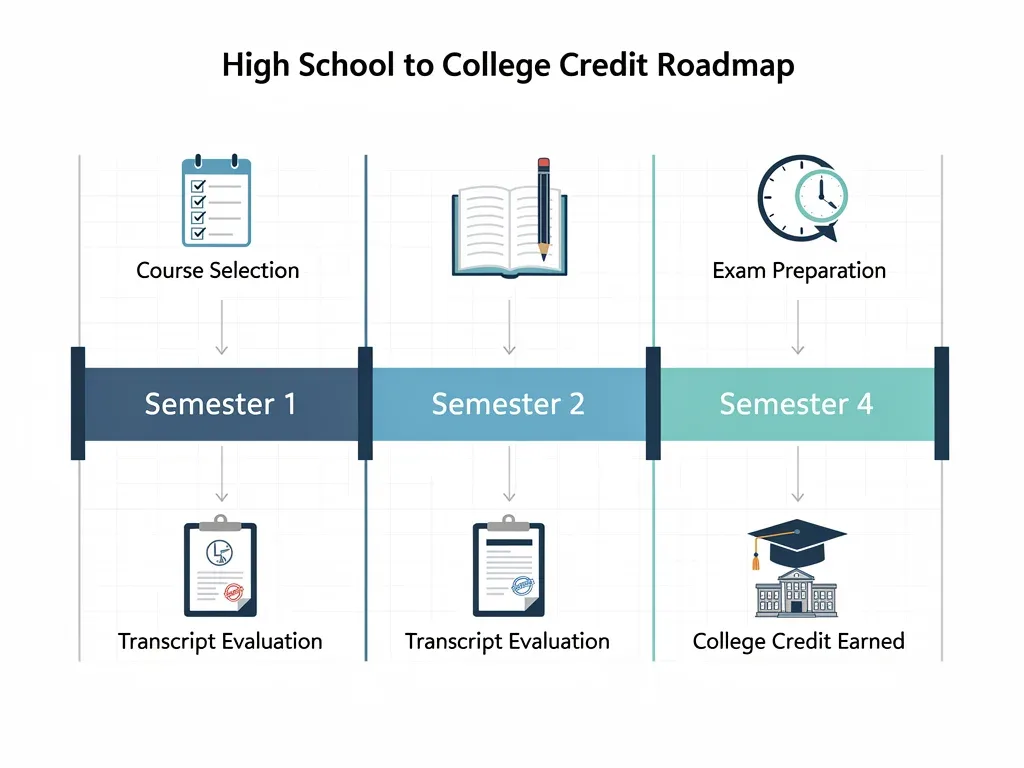
Semester 2: Building Momentum (Junior Year, Spring)
Following a successful first semester, the spring of junior year focuses on building momentum and expanding the scope of college credit acquisition. Students should leverage their experience from the fall to refine their study strategies and potentially increase their course load.
This semester often involves continuing dual enrollment or AP courses, while also exploring additional opportunities or preparing for upcoming standardized tests. The goal is to accumulate more credits while maintaining academic excellence.
It’s also an opportune time to reassess the roadmap based on performance and interest, making any necessary adjustments to ensure the student remains on track for the Actionable 4-Semester Roadmap.
Expanding Credit Opportunities and Academic Rigor
Students can consider taking 2-3 college-level courses this semester, building upon the foundational knowledge gained. This might include a second dual enrollment course, another AP subject, or even a specialized course that delves deeper into a particular area of interest.
For those taking AP courses, dedicated preparation for the May exams becomes a central focus. Utilizing review materials, practice tests, and study groups can significantly improve performance and the likelihood of earning college credit.
Enroll in 2-3 dual enrollment courses or additional AP subjects.
Intensify preparation for AP exams, if applicable, focusing on review and practice.
Explore summer college programs or online courses for additional credit opportunities.
Semester 3: Strategic Advancement (Senior Year, Fall)
The fall of senior year marks a pivotal period in the Actionable 4-Semester Roadmap. Students are now seasoned in college-level work and can strategically select courses that fulfill remaining credit requirements while also bolstering their college applications.
This semester often involves balancing demanding coursework with college application processes and extracurricular activities. The choices made now directly impact the total college credits accumulated and the student's readiness for university.
Maintaining strong communication with college admissions offices regarding dual enrollment credits is also important during this phase. This ensures proper credit transfer and avoids any last-minute surprises.
Maximizing Credit Accumulation and College Applications
At this stage, students should aim to take 3-4 college-level courses, focusing on advanced topics or subjects directly relevant to their intended college major.
This not only helps reach the 30-credit target but also demonstrates a strong academic profile to universities.
Consider courses that provide upper-level prerequisites or fulfill general education requirements at target colleges. This strategic selection can significantly reduce the number of courses needed in the first year of university.
Enroll in 3-4 dual enrollment courses or advanced AP subjects.
Ensure chosen courses align with university general education or major-specific requirements.
Actively engage in college application processes, highlighting early college credit achievements.
Semester 4: Finalizing Credits and Transition (Senior Year, Spring)
The final semester of high school is dedicated to completing any remaining college credit requirements and preparing for the transition to university life.
This period is about tying up loose ends, ensuring all transcripts are in order, and celebrating the significant academic achievement.
Students should focus on maintaining their academic performance and confirming that all earned credits will be successfully transferred to their chosen institution. This final push is crucial for a seamless transition into higher education.
It’s also an opportunity to reflect on the skills and knowledge gained through the Actionable 4-Semester Roadmap, which will undoubtedly serve them well in their collegiate careers.
Ensuring Credit Transfer and University Readiness
In this final semester, students should aim to complete any outstanding college credits, bringing their total to or beyond the 30-credit goal. This might involve 2-3 additional dual enrollment courses or a final set of AP exams.
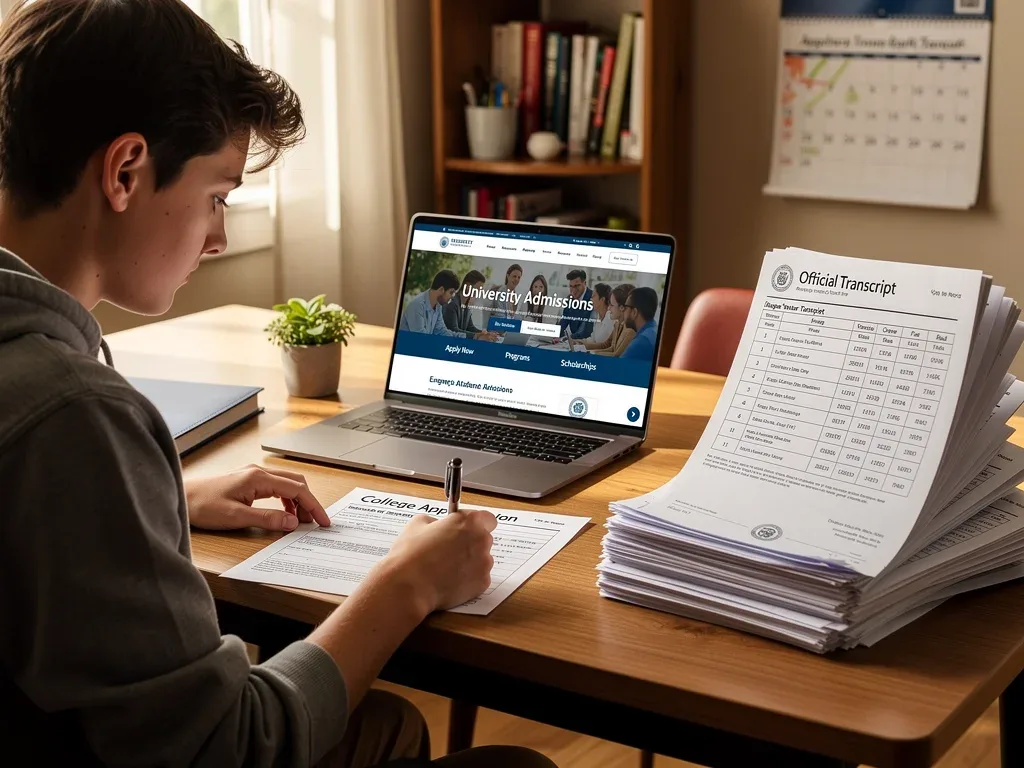
A critical step is to officially request transcripts from all institutions where college credits were earned and have them sent to the chosen university.
Confirming receipt and acceptance of these credits is paramount to avoid delays or issues during college enrollment.
Complete final college-level courses to reach the 30-credit goal.
Ensure all official transcripts are sent to the matriculating university.
Familiarize oneself with university academic advising and course registration procedures.
Maximizing the Benefits of Early College Credits
Earning college credits before high school graduation offers a myriad of advantages beyond just saving time and money.
These benefits extend to enhanced academic preparedness, improved college readiness, and a stronger foundation for future academic and professional success.
Students who complete an Actionable 4-Semester Roadmap often demonstrate greater self-discipline, time management skills, and a deeper understanding of academic rigor. These qualities are highly valued in university settings and beyond.
The experience also provides an invaluable preview of college life, helping students adapt more easily to the higher education environment. This exposure can reduce the initial anxieties associated with transitioning from high school to university.
Financial and Academic Advantages
One of the most immediate and tangible benefits of earning early college credits is the significant financial savings.
By completing a substantial portion of general education requirements in high school, students can reduce the number of semesters or years spent in college, directly lowering tuition costs and student loan debt.
Academically, these students often have more flexibility in their college schedules, allowing them to pursue double majors, minors, or study abroad opportunities. They can delve into advanced coursework earlier, accelerating their path towards specialized knowledge and career preparation.
Reduce overall college tuition and living expenses.
Gain flexibility to explore diverse academic interests or graduate early.
Enter college with a higher academic standing, potentially leading to scholarships.
Overcoming Challenges and Maintaining Success
While the benefits are substantial, pursuing an Actionable 4-Semester Roadmap also presents unique challenges.
Students must effectively manage a demanding workload, navigate complex administrative processes, and maintain a balance between academic rigor and personal well-being.
Common hurdles include time management, the intensity of college-level material, and ensuring proper credit transfer. Addressing these challenges proactively is key to sustained success throughout the four-semester roadmap.
Establishing strong support systems—including academic advisors, family, and peer groups—can provide the necessary encouragement and guidance to overcome obstacles and maintain motivation.
Strategies for Effective Time Management and Support
Effective time management is paramount when balancing high school commitments, college coursework, and personal life.
Students should develop strong organizational skills, utilize planners, and prioritize tasks to avoid feeling overwhelmed.
Seeking academic support, such as tutoring or study groups, for challenging college courses can significantly improve understanding and performance.
Open communication with high school counselors and college advisors is also crucial for navigating academic and administrative complexities.
Develop a structured schedule to balance academic and personal commitments.
Utilize school resources like counseling services and academic support centers.
Communicate regularly with teachers, professors, and advisors regarding progress and challenges.
Key Aspect | Brief Description |
|---|---|
Early Planning | Essential for identifying pathways and aligning courses with future goals. |
Credit Pathways | Dual enrollment, AP/IB are primary methods for earning college credits. |
Strategic Coursework | Selecting transferable courses that fulfill general education or major requirements. |
Credit Transfer | Verifying college acceptance policies and ensuring official transcript submission. |
Frequently Asked Questions About Earning Early College Credits
What is the primary benefit of earning 30 college credits before high school graduation?▼
The primary benefit is a significant head start in higher education, often translating into substantial savings on tuition costs and potentially allowing for earlier college graduation. It also provides invaluable experience with college-level academic rigor and expectations, preparing students for university life.
Which types of programs are best for accumulating college credits?▼
Dual enrollment programs, where students earn both high school and college credit simultaneously, are highly effective. Advanced Placement (AP) and International Baccalaureate (IB) courses with successful exam scores are also excellent pathways. Each offers distinct advantages depending on student goals and local availability.
How do I ensure my earned college credits will transfer to my chosen university?▼
It is crucial to research the specific credit transfer policies of your prospective colleges early in the process. Communicate directly with their admissions or registrar's office. Always ensure official transcripts from the credit-granting institution are sent directly to your chosen university upon high school graduation.
What challenges might students face when following this roadmap?▼
Students may encounter challenges such as managing a demanding workload, adapting to college-level academic standards, and navigating administrative procedures for credit transfer. Effective time management, strong organizational skills, and utilizing available academic support are vital for success.
Is this Actionable 4-Semester Roadmap suitable for all students?▼
While highly beneficial, this roadmap requires a strong academic foundation, self-motivation, and a willingness to engage in rigorous coursework. It is most suitable for students who are academically prepared and committed to an accelerated learning path, with adequate support from their school and family.
Looking Ahead
The implementation of an Actionable 4-Semester Roadmap represents a proactive and strategic approach to higher education. This detailed plan empowers students to gain a significant advantage, fostering academic readiness and financial prudence.
As educational landscapes evolve, such roadmaps become increasingly vital for navigating the path to college success effectively, setting a new standard for high school academic achievement.